Guide: Contracts — The Art of Negotiation

Table of Contents
The Foundation of Professional Relationships
In the world of Race Manager, every collaboration is secured by a contract. Whether it is a star driver or a novice engineer, the terms of their work determine your financial stability and the atmosphere within the team.
What Does a Contract Consist Of?
When signing an agreement, you discuss five key parameters:
- Salary per Race: A fixed amount you pay after each stage.
- Signing Bonus: A one-time payment at the time of closing the deal.
- Duration (in races): The term of the agreement.
- Win Bonus: An additional payment for finishing in first place.
- Podium Bonus: A reward for finishing in the top 3.
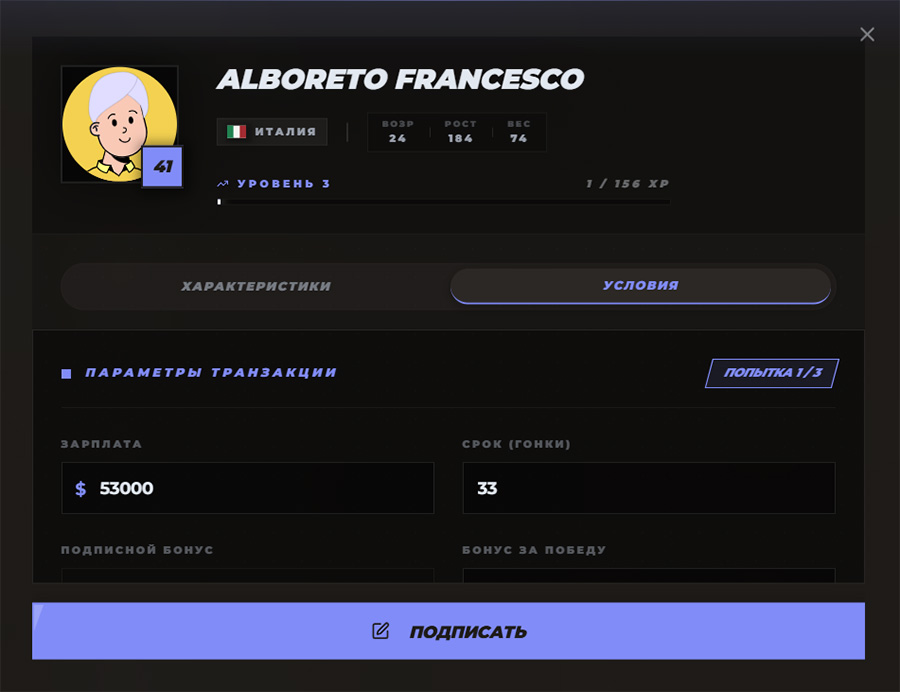
Negotiation is a balance between your budget and the staff ambitions.
Factors Influencing Demands
Staff evaluate their value based on several criteria:
- Skills and Level: The higher the mastery, the more expensive the specialist will be.
- Age: Peak salary expectations occur between 28–34 years (the golden age). Young talents are willing to accept more modest terms for experience, while veterans may make concessions for long-term stability.
- Desired Duration: Younger employees usually prefer long contracts (up to 40 races), while experienced professionals may demand shorter agreements.
Morale and Deadlines
The duration of the contract directly affects the psychological state:
- "Exit Mood": If there are fewer than 3 races left until the end of the contract, the drivers or staff members morale begins to drop. This can lead to a decrease in concentration and mistakes on the track.
- Renewal: Do not delay re-signing valuable staff. You can start negotiations when there are 5 or fewer races left on the contract. Doing this early helps avoid a drop in morale and the risk of talent leaving for competitors.
Early Termination
If you decide to part with an employee before their contract expires, be prepared for financial sanctions. The firing penalty is 50% of the total salary for all remaining races on the contract.
⚠️ Example: If an engineer with a salary of $10,000 has 10 races left on their contract, firing them will cost you $50,000 ($10,000 _ 10 _ 0.5).
Market Negotiations
When searching for personnel in the open market, you have a limited number of negotiation attempts (max 3). If your offers are too insulting, the agent may break off the dialogue.
Flexibility Factor: Not every agent is equally stubborn. Their willingness to accept your terms depends on:
- Morale: Happier staff are more flexible.
- Negotiation Skill: Your own manager's skill can help persuade them to accept lower terms.
- Age: As mentioned, peak-age professionals (28-34) are the most demanding.
💡 Tip: Use the services of your PR Manager and Commercial Director. A high team reputation and their business skills will help you save millions on contracts!
Manage your resources wisely and build a long-term strategy for success!
Featured

Guide: Tires, Wear & Temperature — The Winning Strategy
Master tire dynamics in Race Manager Online: compounds, thermal windows, the 75% cliff effect, puncture mechanics, and wet weather crossover points.

Guide: Race Engineer — Free Practice, Tactics & Synergy
A comprehensive guide to race engineers in Race Manager: baseline setups in free practice, smart telemetry guidance, tactical Plan A & Plan B options, team radio, lean fuel calculations, and building driver synergy.

Top F1 & Motorsport Manager Games Online: 2026 Guide
Looking for the best online F1 and motorsport manager games? Discover how browser-based racing strategy games work, what makes real-time pit wall tactics exciting, and how Race Manager delivers an authentic multiplayer Grand Prix experience.