Guide: Track Characteristics — The Key to Winning Strategy
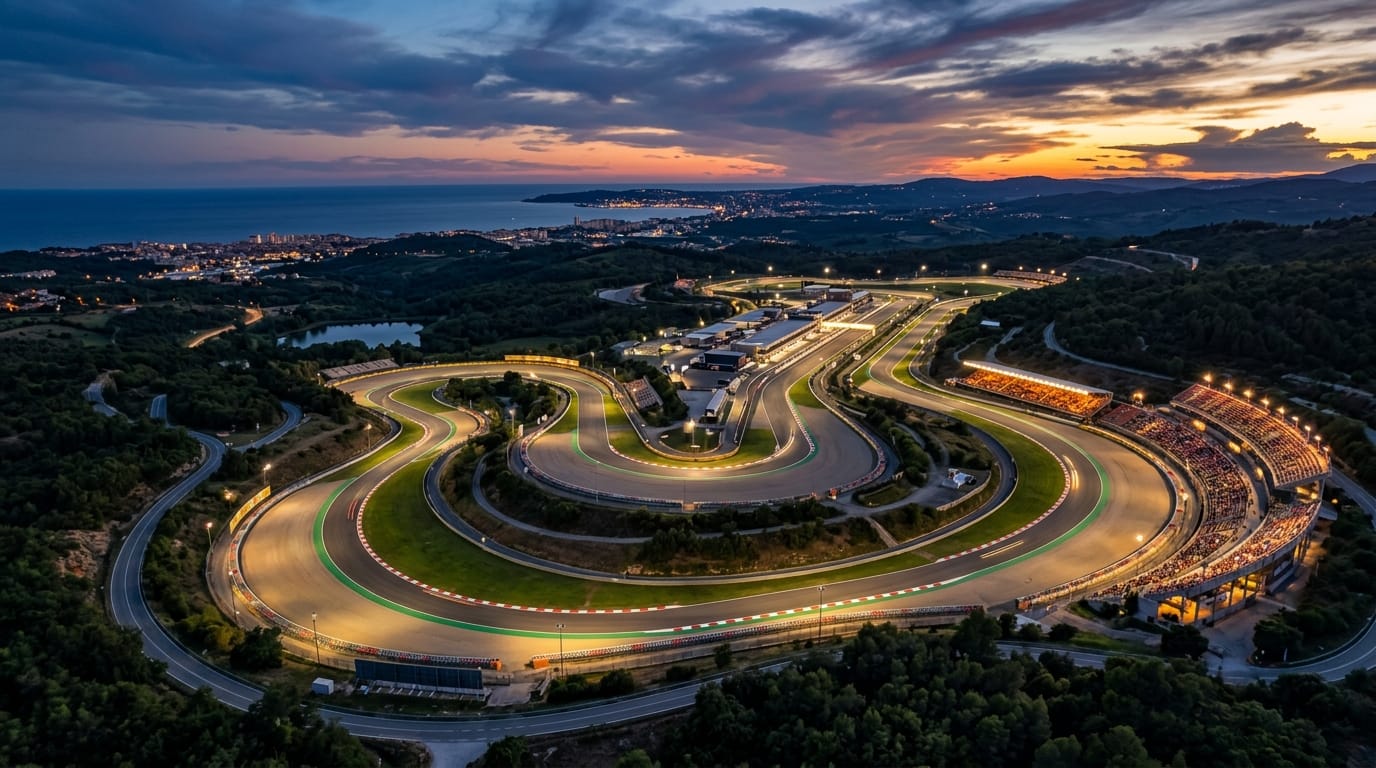
Table of Contents
- 01No Two Circuits Are Alike
- 021. Core Dimensions and Geometry
- 032. Track Sensitivities
- 04Power Sensitivity
- 05Aerodynamic Sensitivity (Aero Sensitivity)
- 06Handling Sensitivity
- 073. Surface Physics and Circuit Dynamics
- 08Tire Wear Factor
- 09Braking Difficulty
- 10Bumpiness
- 114. Overtaking Dynamics and DRS Zones
- 125. Optimal Car Setup (Setup Guide)
- 136. Track Knowledge: The Human Element
No Two Circuits Are Alike
In Race Manager, there is no such thing as a "universal car" capable of easily dominating every Grand Prix on the calendar. A circuit with endless straightaways demands ultra-low aerodynamic drag and pure engine horsepower, while narrow, twisting courses severely punish a lack of downforce and overly stiff suspension.
The Tracks section is your mission control for circuit intelligence. Understanding each circuit's unique parameters allows you to fine-tune your machinery, execute winning pit stop strategies, and focus your factory R&D on the components that truly matter.
1. Core Dimensions and Geometry
Every track dossier begins with foundational geometric parameters:
- Lap Length: Ranges from tight urban layouts (~3.3 km) to legendary endurance-grade monsters like Spa-Francorchamps (>7.0 km). On longer circuits, performance deltas widen significantly, and a single driving mistake costs several precious seconds.
- Race Laps: Calculated to match the official Grand Prix race distance (~305 km). Fewer total laps mean each pit stop accounts for a higher percentage of total race duration.
- Track Width: Dictates overtaking room and defensive lines. Wide modern facilities (15–20 meters) offer alternative racing lines in clean air, while cramped historical streets (10–12 meters) frequently spawn intractable DRS trains.
- Direction:
- Clockwise: The standard layout for most world circuits. Dominated by right-hand turns, placing extreme sustained lateral loads on the left tires, causing the front-left rubber to degrade and overheat first.
- Anti-Clockwise: Venues such as Interlagos, Baku, or Imola. Inverts lateral stress onto the right side of the car while testing drivers' neck endurance with reverse G-forces.
- Pit Lane Loss Time: The cumulative time penalty for traversing the pit lane and completing tire service (~20–25 seconds). At tracks with "cheap" pit stop loss deltas, an aggressive multi-stop strategy often beats a conservative single-stop approach.
2. Track Sensitivities
Inside the simulation engine, sensitivity coefficients dictate which car components govern lap time superiority at each specific venue.
Power Sensitivity
- What it governs: Scales the direct contribution of your Engine Performance to lap time.
- Where it reigns: Monza, Spa-Francorchamps, Baku, Las Vegas.
- Engineering Tip: On power-sensitive tracks, pairing higher engine output with extended Gear Ratios (
gearRatios > 50) extracts maximum top speed down long straights.
Aerodynamic Sensitivity (Aero Sensitivity)
- What it governs: Multiplies the efficacy of your aerodynamic package (Front Wing 30%, Rear Wing 30%, Underbody ground effect 40%).
- Where it reigns: Suzuka, Silverstone, Zandvoort, Circuit de Barcelona-Catalunya.
- Engineering Tip: High wing angles (
Aero > 50) add up to +5% aero efficiency through high-speed sweeping esses, but incur an induced drag penalty (-3% straight-line speed).
Handling Sensitivity
- What it governs: Measures the impact of Chassis Performance and mechanical suspension grip.
- Where it reigns: Monaco, Hungaroring, Marina Bay (Singapore).
- Engineering Tip: In slow hairpins and tight chicanes, aerodynamic downforce cannot fully develop. Lap time is unlocked through razor-sharp front-end turn-in, rapid weight transfer, and differential compliance.
3. Surface Physics and Circuit Dynamics
Dynamic track characteristics govern driver mistake probabilities, tire thermal degradation, and chassis stability over bumps.
Tire Wear Factor
The foundational abrasive friction index. On harsh asphalt with heavy lateral scrub (Silverstone, Suzuka, Bahrain), the Soft compound degrades rapidly, pushing teams toward medium/hard compounds, conservative pace modes, or aggressive two-stop strategies.
Braking Difficulty
Represents the severity of stopping zones from triple-digit speeds. Stop-and-go layouts (Montreal, Monza, Baku) ruthlessly penalize improper brake balance: sub-optimal Brake Bias invites front-tire flat-spots, off-track moments, and heavy lap time penalties.
Bumpiness
Surface roughness and curb aggression. On uneven street courses, an excessively stiff suspension turns your single-seater into a bouncing projectile, causing tire contact patches to skip and lose grip. On billiard-smooth modern asphalt (Red Bull Ring, Paul Ricard), stiff springs maintain a rock-solid aerodynamic platform.
4. Overtaking Dynamics and DRS Zones
Passing in modern motorsport is a chess match between turbulent dirty air and aerodynamic slipstreams:
- Overtaking Opportunities & Difficulty: On tight courses with high difficulty ratings (Monaco, Hungaroring), on-track passes without severe driver error are nearly impossible. A strong Qualifying position accounts for 85% of your weekend success.
- The DRS Multiplier: Activating DRS cuts circuit overtaking difficulty in half (
overtakeDifficulty * 0.5). Circuits featuring 3 to 4 DRS zones (Melbourne, Jeddah, Spielberg) ensure frequent lead changes and allow swift recovery drives from the back of the grid.
5. Optimal Car Setup (Setup Guide)
Each circuit detail page features a built-in interactive setup guide providing baseline reference markers:
- Aero: Balance between Speed (low-drag wings for top speed) and Downforce (high-drag wings for high-speed corners).
- Suspension: Soft for bumpy street circuits and high curbs; Stiff for smooth high-speed circuits.
- Gear Ratios: Short for explosive corner-exit acceleration; Long for reaching 340+ km/h top speeds.
- Brake Bias: Shift to Front for straight-line braking stability; shift to Rear to rotate the car into slow corners at the risk of snap oversteer.
- Tire Pressure: Low to maximize the tire contact patch and mechanical grip; High to reduce rolling resistance and thermal wear.
- Differential: Open for smooth rotation in tight hairpins; Locked for maximum traction putting the power down.
💡 Tip: Always run Free Practice sessions! The track guide provides the target window, but your driver's feedback reveals the exact sweet spot for maximum pace.
6. Track Knowledge: The Human Element
Even a perfectly calibrated machine cannot win without an experienced driver behind the wheel:
- HQ Simulator: Before every race weekend, dispatch your drivers to the Simulator to build Track Knowledge.
- Pace & Consistency Bonus: 100% circuit knowledge awards up to +1.5 performance points (~0.3–0.5s per lap) and reduces pace variance by -20%, minimizing costly driver errors.
- Race Experience: Completing a Grand Prix automatically rewards drivers with +15% track knowledge for that circuit.
Study the telemetry, master each circuit's DNA, and lead your racing team to World Championship glory!
Featured

Guide: Simulator and Track Knowledge
Master every turn. Learn how the expanded Simulator facility allows drivers to train Track Knowledge, how it boosts lap time consistency, and how to minimize layout decay.
Guide: Hidden Mechanics of Crashes & Why Fitness Saves Races
Looking under the hood at why your drivers crash, get penalties, and how endurance (fitness) impacts race pace.
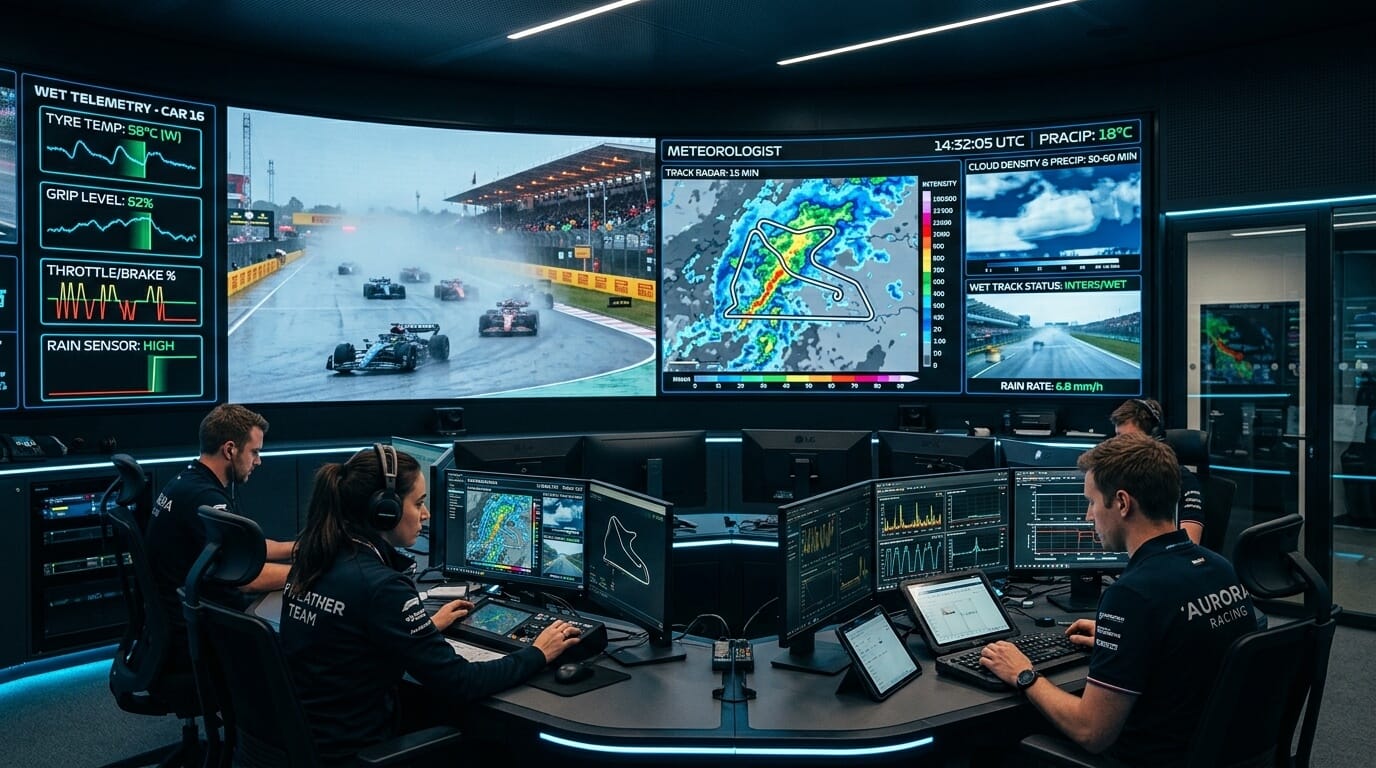
Guide: Weather Station and Forecasts
Master the elements. Learn how the new Weather Station building works, how forecast accuracy improves with each level, and how to utilize it to win rainy races.